Top Benefits of a Language Lab for Engineering & Management Students
Are you an engineering or management student? You must have probably focused intensely on technical skills, mathematics, and domain expertise. But when it’s actually time to get a job and showcase your skills, employers don’t hire based on grades alone. However, professional situations require them to communicate that knowledge clearly.
For example, an engineering student may develop an excellent machine-learning project. During an interview, however, the recruiter may ask: “Can you explain your project to a non-technical person?”
Now knowing the answer is one thing. Explaining it clearly, confidently, and concisely is another.
To overcome such hardships, the importance of soft skills for engineering students is emphasized by the language laboratory. This guide explains the top benefits of language laboratory that students shouldn’t miss reading about.
Why Do Engineering and Management Students Need a Language Lab?
Engineering students think they only need technical knowledge to succeed. But companies like TCS, Infosys, and other leading IT firms have explicitly stated that they reject technically sound candidates who cannot communicate effectively.
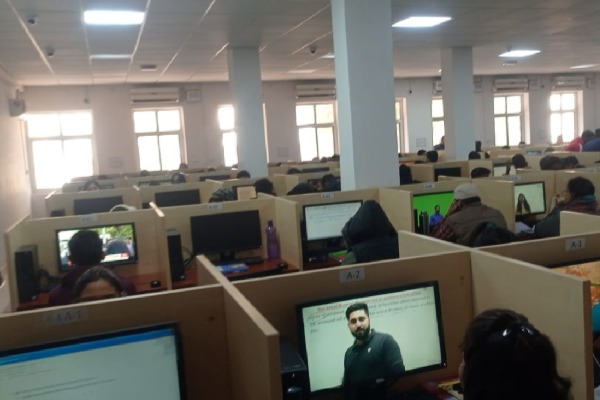
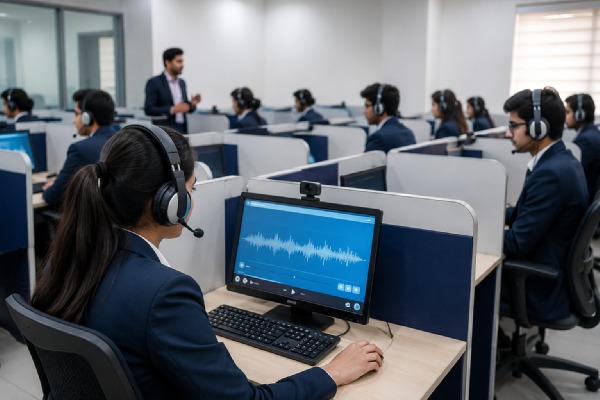
Language Labs appeared as a solution, providing a technology-enabled learning environment where students practise language skills using computers, headsets, microphones, audio/video content, interactive exercises, and speech-recognition or assessment tools (depending on the system).
Unlike an English class where one teacher addresses an entire classroom at once, a language lab allows students to listen, repeat, record, practise, receive feedback, and repeat an activity.
The four core areas of language labs are:
|
Skill |
What Students Practise |
Example |
|
Listening |
Understanding spoken English |
Listening to an interview |
|
Speaking |
Fluency and pronunciation |
Recording a 60-second introduction |
|
Reading |
Comprehension and vocabulary |
Reading a technical passage |
|
Writing |
Professional written communication |
Drafting an email |
At its core, modern language-lab systems can also support self-learning, teacher monitoring, interactive activities, and individualised practice.
Key Benefits You Need to Know
From building confidence to sharpening pronunciation, the benefits of a language lab are quite a lot.
Here's a closer look at how a language lab can transform the way engineering and management students speak, present, and connect with the world around them:
English Communication Skills for Engineering Students
Engineers are the ones who work in environments where they need to communicate with clients, managers, developers, vendors, and multidisciplinary teams. But what if they don’t know how to communicate effectively and fluently?
Language labs, on the other hand, develop English communication skills for engineers. Engineers can simultaneously practice speaking, listening, reading, and writing using interactive multimedia content and real-time feedback.
|
Did You Know? 🤔: As per research conducted on language laboratories in professional colleges, students develop 90% more language proficiency compared to passive learning methods. For instance, when they practice through active engagement like speaking in groups or individual role-playing games, they learn fast. |
Language labs setup allows you to:
- Record and listen to your own voice.
- Present your opinion and respond to another person's argument.
- Practice pronunciation with native speaker examples.
- Describe a technical problem without using unnecessary jargon.
- Receive instant feedback on speaking clarity.
Practical Learning Through Real-World Scenarios
One of the biggest benefits of language laboratory learning is that students get repeated opportunities to actually use English, rather than textbook exercises. Instead of memorizing grammar rules, you'll work through situations like:
- Presenting a technical project to a non-technical audience.
- Handling difficult conversations with clients.
- Explaining yourself to the interviewer.
- Negotiating project deadlines.
- Writing professional documentation.
- Pronouncing difficult terms and situations effectively.
- Leading team meetings
Through hands-on experience, this method makes sure that soft skills for engineering students are directly applied in the workplace.
Personalized Learning at Your Own Pace
Research shows that students who learn at their own pace retain information at significantly higher rates. Soft skills training for engineering students is designed that way to give learners the flexibility to learn according to their individual needs and schedules.
So students will:
- Spend extra time on weak areas.
- Skip content they've already mastered and spend their time where it is much needed.
- Practice during convenient hours.
- Track their personal progress through detailed analytics.
- Access courses offline without requiring internet connectivity.
Improves Pronunciation and Fluency
Knowing vocabulary doesn't automatically mean you know how to pronounce it naturally. Language labs can use audio exercises, recordings, and speech-recognition technology so that students can practise pronunciation and oral fluency.
They can work on:
- Word stress.
- Intonation.
- Sentence rhythm.
- Pronunciation.
- Speaking speed.
- Fluency.
Let’s understand with an example,
A student who is preparing for a placement interview can record an answer, listen to it, identify awkward pauses, and practise by speaking again.
Building Confidence Through Repeated Practice
“I know what I want to say, but I don't know how to say it”. Many students experience exactly this problem.
A student may get only a few opportunities to speak during a conventional classroom session. Language labs change the equation by creating structured practice time. The most underrated benefits of language laboratory environments include judgment-free practice spaces where you can fail repeatedly until you succeed, that too without embarrassment.
Research indicates that students who practice speaking regularly in labs show 40% improvement in interview performance and placement success rates. On top of that, the continuous feedback mechanism helps you identify and correct mistakes immediately.
Soft Skills Training for Engineering Students
Beyond language learning, modern language labs additionally provide detailed soft skills training for engineering students, including:
- Writing and optimizing resumes.
- How to prepare for an interview.
- Developing your personality.
- Strategies for conducting group discussions.
- Managing conflicts.
- Leadership and talking to people.
These skills make you a complete professional, not just a technical expert.
Real-Time Progress Monitoring
A language lab isn't useful only for students. It can also give teachers a more structured way to monitor learning. They can do so through the language lab's administrative dashboard. This means your instructor knows:
- Which concepts you're struggling with.
- Your speaking speed and clarity improvements.
- Time spent practicing each skill.
- Your weak pronunciation patterns.
Knowing this, teachers can customize classroom sessions based on your actual needs rather than assuming everyone needs the same help.
Enhanced Employability and Placement Success
The importance of soft skills for engineering students clearly varies with professional success. Students who received structured soft skills training through language labs showed off:
- Higher job offer rates.
- Better salary negotiations.
- Faster career progression.
- Stronger performance in technical interviews.
- Improved client-facing communication abilities.
The Research Behind Language Labs
According to research from educational institutions studying English Language Laboratories (ELLs) in professional colleges, students using structured language lab training showed improvements in the following areas:
- Self-assurance during an oral presentation.
- Clarity of written communication that makes sense.
- Accuracy of grammar and vocabulary application.
- Scores of interview performance.
- Overall ratings of employability.
However, this methodology is what English communication skills for engineering students require.
How Language Labs Support Management Students?
Management students benefit equally from language labs. The advantages of language labs for management education include:
- Leadership communication training.
- Business presentation skills.
- Negotiation techniques.
- Cross-cultural communication, which is important for students in global management roles.
- Report writing and documentation.
- Stakeholder communication strategies.
How Should Students Use MC Saxena’s Language Lab Effectively?
Simply sitting in a language lab once a week will not transform communication skills. To get meaningful results, students need to use the lab consistently and actively.
A simple weekly approach looks like this:
- 10 Minutes: Work on listening.
- 10 Minutes: Reading and learning new words.
- 15 Minutes: Speaking and recording for fifteen minutes.
- 10 Minutes: Work on your pronunciation.
- 5 Minutes: Review and feedback.
The exact schedule can vary, but the principle remains the same, i.e., consistent practice beats occasional intensive practice.
Here at Dr M C Saxena College of Engineering and Technology, the language lab offers guided modules, tracks the progress of students, and provides assistance from the faculty members. The students who follow this simple routine each week find themselves far more prepared for industrial work.
Bottom Line
Having technical knowledge alone isn’t enough for a successful career. Our language lab gives engineering and management students the systematic and hands-on practice they need to speak and write.
These soft skills for engineering students can help them communicate better so they can present and express their ideas better. A language lab trains you for experiences that matter, such as acing an interview, leading a team meeting, or explaining a complex project to a client.
Build the communication skills that set you apart and take the first step toward being more confident and career-ready.
FAQs
Q1: What are some important soft skills for engineering students?
A: Problem-solving, teamwork, and communication are the three soft skills that engineering students need most. These non-technical qualities are advantageous to future engineers because they enable the ability to address real-world challenges, teamwork, and the exchange of clear ideas.
Q2: How much time should I spend in a language lab daily?
A: Most educational institutions, including Dr M C Saxena College of Engg and Technology, recommend 30-45 minutes daily for optimal results.
Q3: Can language labs help if English is my second language?
A: Yes! Students learning English as a second language can benefit greatly from language labs. At our college, we offer personalized paths based on your current level of skill and progress.
Q4: In what ways do language labs guarantee that I don't simply commit answers to memory?
A: In quality language labs like the one we have at our college, scenarios are chosen at random and the level of difficulty changes as needed. We even track response patterns to make sure it's genuine skill development rather than memorization.
Q5: Can I access language labs after completing my course?
A: It depends on the institution. There are some colleges that provide alumni access.
Q6: Can employers actually observe improvements as a result of language lab training?
A: Yes, according to the placement officers themselves, students from schools with organized language lab programs perform 25-35% better during the hiring process, earn more money at first, and advance through the ranks more quickly.